AGRONOMIC PRACTICE IN RICE PRODUCTION
Basically, rice production entails the steps outlined below. It starts with the selection of variety, preparation of suitable land, establishment of the plant through seeding, followed by natural resource management (water, fertilizer, pets, weeds), hen harvesting, drying and storage or milling for food purposes.
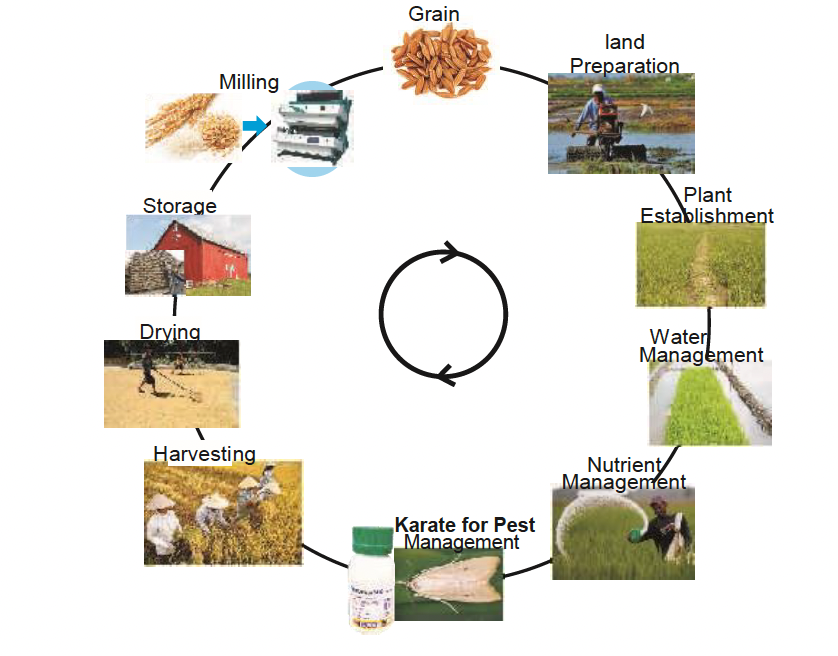
The major steps:
1. Site selection
2. Selection of suitable rice variety to plant on the selected site
3. Land preparation
4. Planting (where rice is direct seeds) or preparation and management of nursery (where rice is transplanted).
5. Transplanting
6. Fertilizer application
7. Weed management
8. Pest and diseases management
9. Harvesting
In this module, these steps will be followed step-by-step and recommendations at each level will be outlined.
Training Procedure:
1. First know what existing knowledge the trainees know about rice production.
2. Identify what is the gap between what the learners know and what they need to know.
3. With the local training facilitator, initiate a discussion among the farmers about their rice production practices. Nothing what are the differences between their practices and the recommended best management practices. Also note innovative practices among the farmers used to overcome certain production constraints.
4. Together with farmers, facilitator and the trainer discuss what, why and when should the required changes or improvement of practices need to be applied.
5. Lead farmer should note important decision agreed on at each level of practice to enable refreshment even after raining.