Pest and diseases management in organic cocoa
Cocoa can be affected by many pests and diseases, which thrive well in the warm and humid climates where cocoa is commonly grown. However, with proper understanding and implementation of a natural agroecosystem, pests and diseases can be effectively managed. Several experiences and research have shown that it is possible to reduce pests and diseases in cocoa significantly, only by modifying a production system to a more dynamic agroforestry system. A series of relationships have been observed between the supply of light, air, water and nutrients to the cocoa system on one hand and the appearance of diseases and pests on the other hand. Cocoa is a shade-loving crop – all other crops to be mixed with cocoa should either be planted beforehand or at the same time as the cocoa. If the area had any natural growth, then some trees should be left standing during land preparation. On the other hand, fast-growing trees which will rapidly provide cover, such as bananas, pawpaw or castor oil trees should be planted before cocoa is planted.
Most pest and disease infestations in cocoa have been found to occur under the following conditions:
Ignoring the succession sequences of forest systems. Having originated in the primary forest, cocoa can endure well old primary forest tree species as shade trees, but not old secondary trees.
Cultivation of cocoa monocultures with a few shade trees and species only.
High density of vegetation due to densely spaced trees and failure to thin or prune the trees, which creates a conducive, humid environment for the cocoa pests and diseases. Cocoa trees ideally have one stem and only 3 to 5 main branches, with enough side branches and leaves to capture most of the sunlight.
In Africa, the main cocoa diseases are the black pod and cocoa swollen shoot virus (CSSV), while the most common pests are mirids or capsids and mealybugs. Mealybugs are mainly a problem as vectors of cocoa swollen shoot virus (CSSV). These and other pests and diseases can be managed through a combination of approaches and measures applied before planting, after planting before infestations, and after planting when infestation occurs as described below.
Cocoa swollen shoot virus (CSSV) disease
Important to know
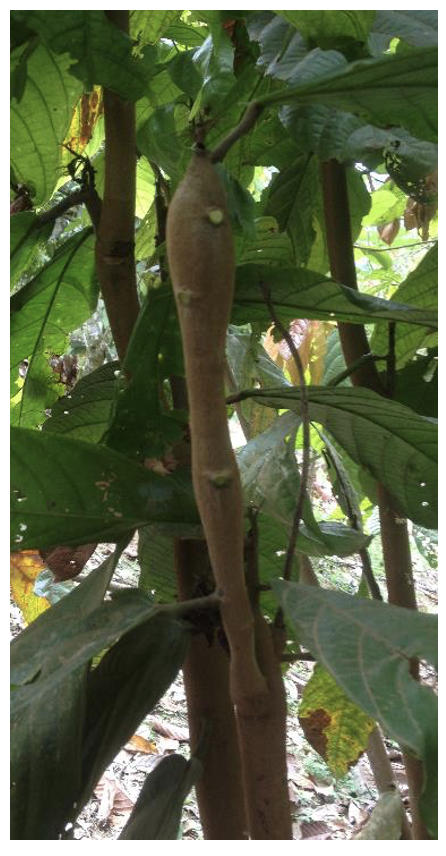
CSSV is caused by the swollen shoot virus and is a major problem in all cocoa growing regions.
CSSV is transmitted by mealybugs such as Planococcoides species.
Symptoms include swelling of roots and stems, loss of colour on the leaves, trees becoming yellow, and if there is a severe viral attack, infected trees die.
Measures before planting
Using disease resistant and pest tolerant varieties: cocoa varieties with tolerance to black pod disease and swollen shoot virus disease exist, for example, in West Africa. Local cocoa research institutes may inform about their availability.
Maintaining soil fertility: efforts for improving soil fertility are critical, particularly where cocoa is grown on poor soils with low nutrient levels, to ensure a good general health of the tree.
Ensure healthy planting material shoots are collected from non-infested trees and/or plantations only.
Ensuring field hygiene: this is probably the single most important method for managing key cocoa diseases. All diseased or infected plants, pods and other plant parts should be removed from the plantation and destroyed.
Measures after planting
Proper crop husbandry (prunning, and tree height control) to improve the health of the cocoa trees.
Maintaining soil fertility is critical, particularly where cocoa is grown on poor soils with low nutrient levels, to ensure a good general health of the trees.
Measures in case of infestation
All diseased or infected plants, pods and other plant parts should be removed from the plantation and destroyed.
Black pod disease
Important to know
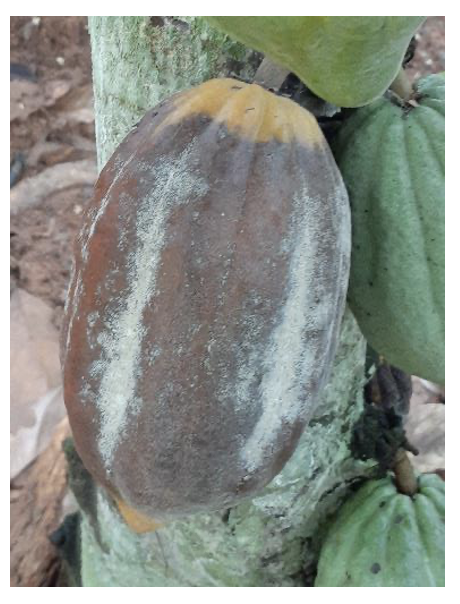
It causes the most important yield losses in cocoa worldwide.
It is caused by several species of the fungi Phytophthora. Two species – P..megakarya and P. palmivora – cause this most important yield-limiting disease in the African cocoa industry.
Although Phytophthora species attack all parts of the cocoa tree, the major economic loss comes from infection of the pod. Pods can be infected at any stage of development.
Symptoms include the appearance of a small translucent spot on the pod. The spot turns into a chocolate brown colour, then darkens and expands until the whole pod turns black and mummifies. Infected pods also have white spores on their surface. This sporulation becomes denser as the disease progresses.
Measures before planting
Use cocoa varieties with tolerance to black pod disease. Inquire from your local cocoa research institutes or Extension Officer about their availability.
Planting materials for establishing new cocoa fields should be disease-free.
Measures after planting
Regulating cocoa tree height, pruning and shade management: Removal of some branches of cocoa and shade trees by pruning and proper maintenance of the height of the cocoa trees will allow light to penetrate to the centre of the tree, and will increase air circulation. Both make the conditions unfavourable for the black pod disease.
Removing shade trees with a shorter life cycle than cocoa at the end of their life cycle is an important measure to be undertaken in this concern.
Ripe pods should be removed as soon as possible to minimise attack by fungal diseases or animal pests. Harvesting should be carried out at regular intervals of 1.5 to 3 weeks.
Proper weeding increases air circulation and reduces the humidity in the plantation and thereby reduces the incidence of the black pod disease.
Measures in case of infestation
It has been shown in West Africa that regular removal of diseased pods can suppress the black pod disease.
Spray Sulphur compounds (0.2 % concentration) at the first signs of infection.
Mirids or capsids (Distantiella theobromae and Sahlbergella singularis)
Important to know
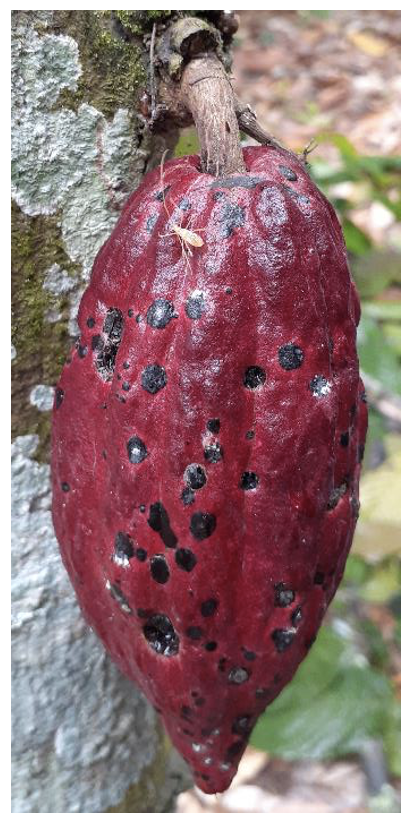
Mirids (capsids) are sucking insects.
They damage young shoots and cocoa pods thereby reducing the yield of cocoa.
Feeding by mirids is characterised by discoloured, necrotic (blackened) areas or lesions around affected plant tissue.
Young cocoa trees are very vulnerable to attacks of mirids when they are grown without shade.
Measures before planting
Regularly monitor the crop – attacks are frequent during the rainy season.
Do not interplant cocoa with cashew, tea, sweet potato, guava, cotton, and mango which are alternative hosts for the pest.
Measures after planting
Cultural practices including pruning, weeding and shading schemes have been used in the control of the pest.
Ripe pods should be removed as soon as possible to minimise attack by fungal diseases or animal pests. Harvesting should be carried out at regular intervals of 1.5 to 3 weeks.
Measures in case of infestation
Spray with insecticidal soap, neem or pyrethrum