Pest and diseases management in organic pineapples
The major pests of pineapple are thrips, mealy bugs and scales, and nematodes, while the two common fungal diseases are Phytophthora heart (top) rot and Phytophthora root rot. However, harvested pineapples can further be infected mainly by phytopathogenic fungi and bacteria normally through wounds, insect injuries, and physical damage during transportation, handling, and packaging. Black rot (Thielaviopsis paradoxa), fruitlet core rot (disease complex), yeasty fermentation (Saccharomyces spp. and Candida spp.), pink disease (Tatumella citrea), etc. are the major postharvest diseases of pineapple.
Below is the combination of approaches which should be applied before planting, after planting before infestations, and after planting when infestation occurs.
Mealy bugs and scales
Important to know
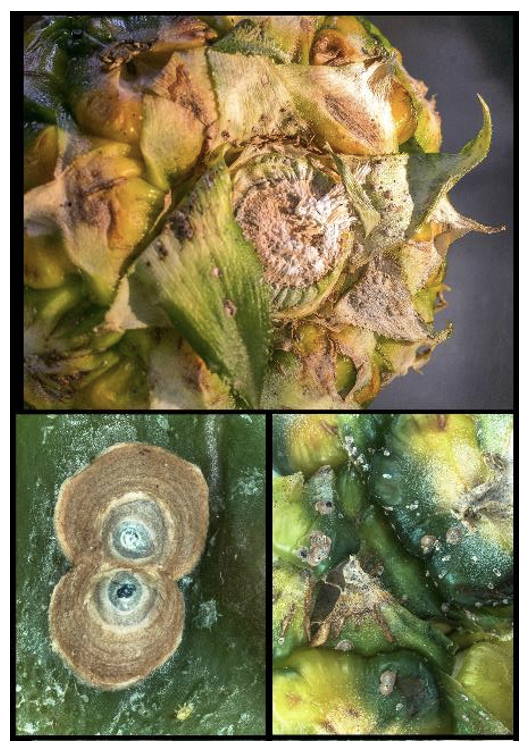
Mealybugs and scales are sap-sucking pests. They manifest as fluffy, wax-like material building up near the fuzzy looking insects, while scales normally hide under waxy or cottony covers.
Mealybugs are the most serious pests of pineapples, also transmitting the pineapple wilt disease.
Measures before planting
Remove alternate hosts such as hibiscus, custard apple, guava in and around the pineapple crop field.
Avoid using 5 to 6 years old suckers for planting as they are likely to contain some mealybugs or scales.
The mealybug infested fields must be prepared by removing all the plant residues and burning them.
Remove weeds present in the field as they support an increase in mealybug population by giving them alternate food sources.
Use clean sterilised equipment when undertaking planting and intercultural operations in an uninfested field.
Measures after planting
Good soil fertility and water conservation practices promote strong plants that are less susceptible to mealybug/scale attack.
Timely weeding reduces competition with the growing pineapple plants.
Measures in case of infestation
All diseased or infected plants should be removed from the field and destroyed.
Root nematodes
Important to know
Various nematodes are attracted to pineapples, but root-knot nematodes (Meloidogyne javanica) and root lesion nematoes (Pratylenchus brachyurus) affect the roots and cause premature death.
Measures before planting
Controlling nematodes is difficult, so it’s recommended to use clean planting materials and clean fields.
A three-year crop rotation with grasses is further recommended for pineapples. Alternatively, maintain a weed-free and host-free fallow period of at least 6 months for significant decline in nematode population.
Thorough land preparation will reduce nematode population – it will allow the soil to dry out and accelerates the breakdown of plant material harbouring nematodes.
Measures after planting
Good soil fertility management and watering practices to maintain strong healthy plants.
Timely weeding reduces competition with the pineapple plants.
Measures in case of infestation
All diseased or infected plants should be removed from the plantation and destroyed.
Phytophthora heart (top) rot and Phytophthora root rot
Important to know
These two common fungal diseases can be controlled the same way, though they are caused by different pathogens.
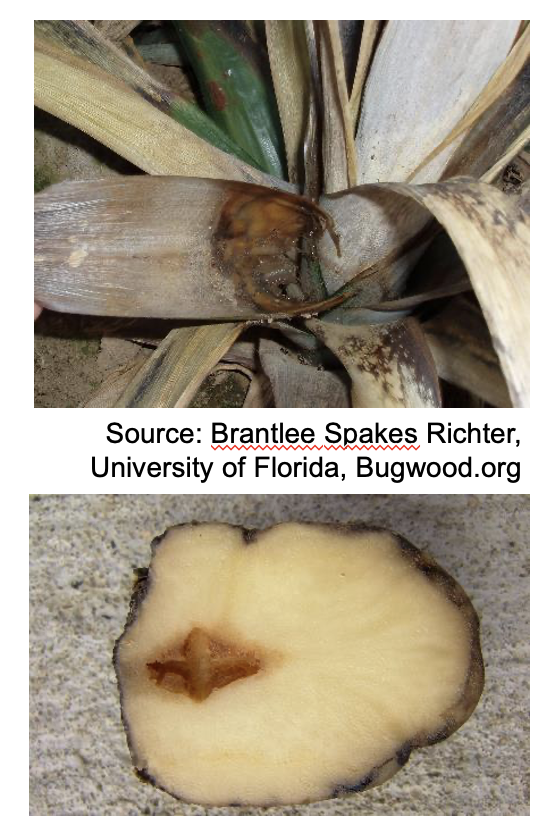
The symptoms of root rot are similar to those caused by nematodes. A plant that looks like it needs to be watered, with drooping leaves and general signs of distress is likely to be infected. Leaves change in colour from a healthy green through various shades of red and yellow. Leaf tips and margins eventually become necrotic, the root system is dead, and plants can easily be pulled from the ground.
Premature ripening of fruits from infected plants.
Top rot may show similar signs, but also shows dead leaves around the center of the plant.
Both are caused by overwatering, poorly drained soils or too much rainfall.
Measures before planting
A well-drained seed bed is required.
Avoid excessively deep planting.
Prevent soil entering the heart during planting.
Plant on raised beds of at least 20 cm height.
Measures after planting
Maintain proper drainage for minimising the risk of Phytophthora infection.
Measures in case of infestation
All diseased or infected plants should be removed from the plantation and destroyed.