Pest and diseases management in organic field beans
Common Beans (Phaseolus vulgaris) belong to the very large family of Fabaceae (also called Leguminoseae), which includes food plants such as beans, peas, peanuts, and soybeans.
Like other legumes too, beans transform atmospheric nitrogen into nitrogen that can be taken up by plants. They do this with the help of Rhizobium bacteria that live in their roots. Thus, they fit well as an intercrop or as part of a crop rotation plan.
However, beans suffer from a number of pests and diseases. The major insect pests in order of importance are aphids, cutworms, bean stem maggots (bean fly) and storage pests such as bruchids (bean weevil), while bean mosaic viruses, blight, leaf rust, root rots, anthracnose and angular leaf spot are the most important diseases.
Organic management of pests and diseases in bean production is based on an integrated preventive package, which encourages that a range of practices are applied simultaneously to prevent the introduction and spread of pests and diseases. Individual management of specific bean pests and diseases is difficult in beans since they are very short-term crops. The combination of these approaches is provided in the sections below, highlighting those measures which should be applied before planting, after planting before infestations, and after planting when infestation occurs.
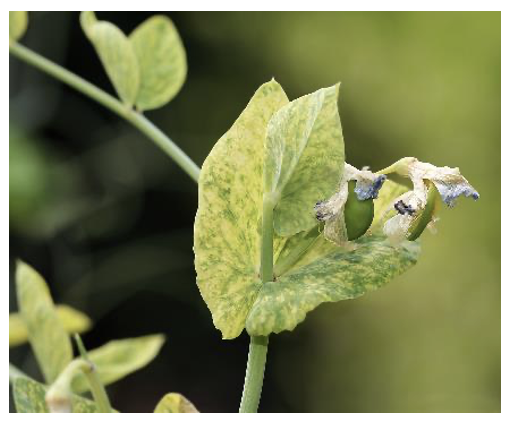
Bean common mosaic virus (BCMV) :
Important to know
BCMV causes cupping and twisting of leaves with a light and dark green mosaic pattern.
Affected plants produce smaller, curled pods significantly reducing yields.
The virus is seed-borne and transmitted by aphids.
Measures before planting
Choose varieties with good yield potential and, if possible, resistant to BCMV.
Seeds should be obtained from approved seed suppliers or carefully selected by the farmer to avoid introduction of BCMV.
Maintain a crop rotation of at least two seasons before planting the next bean or related crop (such as peas, soybean, peanuts).
Measures after planting
Improve soil fertility to ensure strong and healthy plants taking caution to not oversupply nitrogen as beans can fix their own nitrogen and excessive application is detrimental.
Effectively control aphids when they are threatening the bean crop, as explained below.
Measures in case of infestation
Remove any plants with virus symptoms from the field - burn, bury, make compost or use disease infested materials as mulch in other fields like perennial crop fields.
Halo blight, leaf rust, Fusarium root rot, anthracnose and angular leaf spot
Important to know
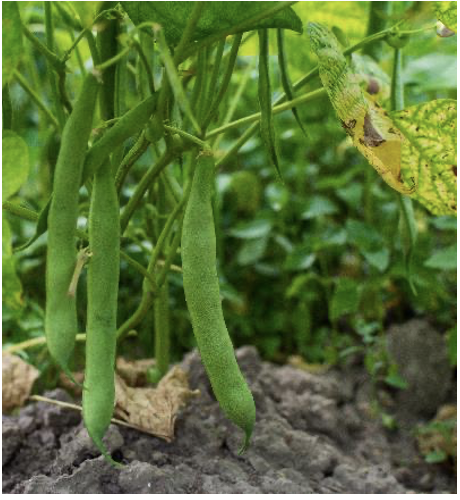
Halo blight (Pseudomonas syringe pv. phaseolicola) causes small water-soaked pin-pricks-like spots on bean leaves. These spots eventually turn brown and the surrounding tissue gradually becomes yellow-green.
Angular leaf spot (Phaeoisariopsis griseola) causes numerous small dark brown spots with angular edges, which join together causing yellowing, dying of affected leaves and premature defoliation. It also affects pods causing brown blotches.
Anthracnose (Colletotrichum lindemuthianum) forms dark-brown lesions on leaves, but also on the stem and pods which appear black, elongated and sunken. Ultimately the infected seeds become discoloured.
Bean rust (Uromyces appendiculatus var. appendiculatus) causes rust spots or pustules on all parts of the plant, but mostly on the leaves. The disease is spread by wind, farm tools, insects or water splash.
Fusarium root rot (Fusarium solani f.sp. phaseoli) affects leaves, turning yellow and necrotic and later causing wilting, especially seedlings. The fungus can survive in the soil for up to 6 years.
As fungal infections, they are favoured by high moisture and warm temperatures (above 20 degrees Celsius).
Measures before planting
Choose certified disease-free seed – angular leaf spot is seed-borne.
Destroy crop residues or use them as mulch away from the bean fields.
Plant on raised beds or ridges, and avoid furrow irrigation to allow good drainage especially in areas susceptible to water logging.
Crop rotation is essential to limit these soil-borne diseases – ideally beans should not be grown on the same plot for any two consecutive seasons.
Measures after planting
Weeding and other operations in bean fields when the soil is wet encourages the spread of soil-borne diseases, and should be avoided when possible.
Ensure shallow tillage, e.g. during weeding, as damage to the roots or stem will encourage infection by soil borne diseases.
Measures in case of infestation
Sulphur compounds: spray Sulphur compounds (0.2 % concentration) at the first signs of infection. Some varieties are susceptible to Sulphur, it is recommended that farmers make trial sprayings before treating the whole crop.
Aphids
Important to know
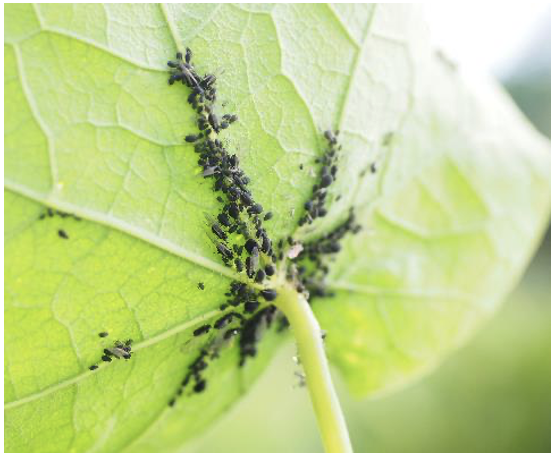
There are many species of aphids attacking many different types of crops (legumes, cereals, fruits and vegetables). For beans, it’s the black bean aphid (Aphis fabae).
Aphids pierce plant tissues to feed on the sap causing curled leaves, malformed flowers and fruits, and stunted growth. Heavily attacked leaves turn yellow and eventually wilt. Aphids excrete a sugary, sticky liquid called honeydew which due to fungal growth forms sooty black mould on the plant.
Black ants are very common on plants with aphid infestations – they feed on the honeydew.
Aphids attack beans at any stage from seedling to flowering/fruiting and any part of the growing plant.
Measures before planting
Crop rotation – ideally, beans should not be grown on the same plot for any two consecutive seasons.
Intercropping with chives or garlic helps repel aphids.
Early planting is recommended to avoid water stress. Early planting will also enhance quick growth of the bean plants and evade attacks at sensitive stages.
Encourage natural enemies, for example by growing or leaving natural areas (including flowering plants) around the boundary or along strips in the field. There are so many bugs, beetles and hoverflies that feed on aphids.
Measures after planting
Regular monitoring of aphid infestation – regularly scout the bean field examining the underside of the leaves and growing points. Early detection is important as aphids multiply very fast. Especially watch out for the presence of ants which are attracted to the nectar released by the feeding activity of the aphids.
Proper weed control especially in bush beans is necessary until the bean foliage covers the rows, thereby inhibiting weed growth. Weeds compete with the beans for nutrients, and some weeds can be hosts for aphid multiplication.
Measures in case of infestation
Neem based products can be sprayed, but due to slow mode of action repeated sprays may be required and neem is generally safe on natural enemies.
Pyrethrum based product sprays are most effective against aphids, but they also affect natural enemies.
Bean flies (Ophiomyia spp.)
Important to know
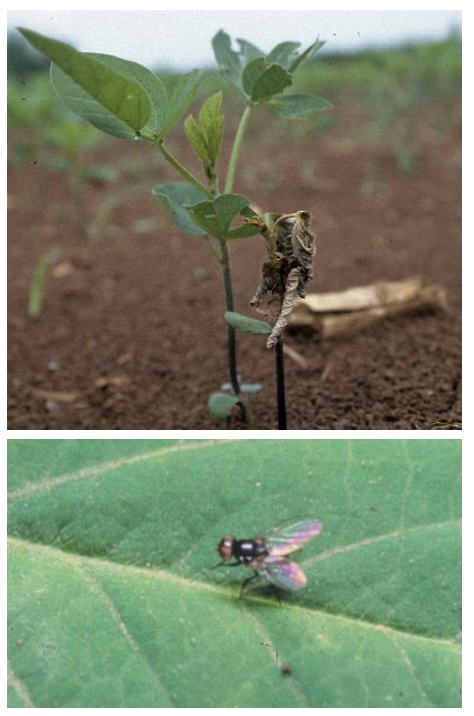
Also called bean stem maggots, bean flies are serious pests in Africa.
Females pierce the leaves and lay eggs into young leaves. Maggots mine their way from the leaves to the base of the stem, feeding on the tissues and causing the stem to swell and split. Attacked plants may wilt or get stunted.
Resistant dry bean varieties to bean fly infestation are available in some countries.
Measures before planting
Crop rotation: Beans should not be grown on the same plot for any two consecutive seasons. Avoid planting beans near cowpea, soybean and many other leguminous crops, that may be the source of bean flies.
Pests can be regulated by encouraging functional biodiversity – through promotion of natural enemies of pests with flowering natural areas.
Early planting to enhance quick growth of the bean plants – bean fly populations are low early in the season.
Vigorously growing plants are more resilient and can tolerate bean fly infections – damage is severe in plants growing in infertile soils or drought conditions.
Measures after planting
Regular scouting for early detection of the bean flies.
Fresh manure should not be applied in the bean garden to attract the bean fly
During weeding, slight ridging or earthing up of damage plants will help bean plants to grow adventitious roots, if there is moisture, helping them to recover from bean fly damage.
Measures in case of infestation
Remove and destroy (by burning) crop residues and all plant parts with symptoms of damage by bean flies.
Botanical plant extracts (such as Tephrosia, Tithonia, Marigold, Datura and Neem leaves) can be sprayed.
Bruchids/bean weevil (Acanthoscelides obtectus)
Important to know
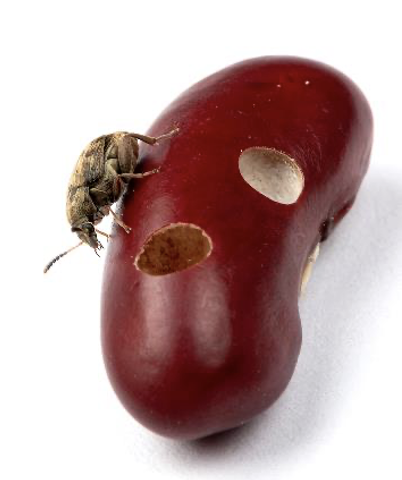
They are small beetles, which attack dried beans in storage, prevalent across Africa. Bruchid infestations can begin even before the beans are harvested and carried over into storage.
Females lay eggs inside the bean seeds, and larvae emerge and feed on the seeds and develop to adults. As they emerge from the bean grains they leave small rounds holes on the seeds. The pest destroys the seeds and reduces germination capacity.
Heavy infestation can lead to total loss of stored crop.
Measures before storage
Good storage hygiene in the crop store: remove any spilled or leftover grain from last season.
Proper drying: beans should be dried to a moisture content of less than 15 % (when the seeds are brittle when you bite them with your teeth).
Beans should be winnowed to remove all the chaff and sorted to remove broken beans, stones, deformed beans, or any remaining plant parts. Broken and deformed beans can be prepared and eaten immediately because they do not store well.
Storage should be done in clean cloth/sisal bags or sealed containers that should be checked occasionally for early detection of bean weevil infestation.
In some places, farmers mix the stored beans with ashes, maize or millet flour to keep pests away. This is mostly done for beans that are to be consumed by the farmer when the flour is washed off before cooking the beans.
Bean seeds for next season’s planting can be mixed with dried leaves of marigold, tephrosia, neem or any other locally tried plant, to keep storage pests away.
Use plastic bags, which can be hermetically sealed (made airtight) to store beans (to be used as seed material). The beans must be well dried (10–11 % moisture content) and the plastic bags must be carefully sealed.
Measures during storage
Maintain proper ventilation of the storage facility.
Measures in case of infestation
Stored bean seed should be placed out in the sun occasionally (once every month) in order to reduce moisture content and to kill off pests.