Pest and diseases management in organic groundnuts
Several pests and diseases can cause major ground nut yield losses. Groundnut rosette and early and late leaf spot (diseases), and aphids and termites (pests) are of economic importance in groundnut production.
Luckily, groundnut seeds are protected by a shell, which acts as an excellent natural barrier against damage. But, when farmers wait too long before they start harvesting (usually until all leaves are dry), the pods are exposed to attack by rodents and insects, and aflatoxin contamination.
Like the other crops, these and other diseases and pests can be managed through a combination of approaches and measures applied before planting, after planting before infestations, and after planting when infestation occurs as described below.
Groundnut Rosette
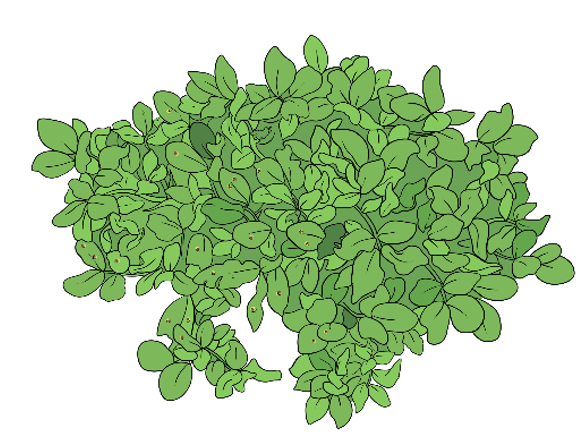
Important to know
Rosette is the most destructive groundnut disease in Africa which can cause 100 % yield loss in severe cases, especially if the disease occurs at flowering.
It is a viral disease transmitted by aphids such as the groundnut aphid (Aphis craccivora).
The leaves appear both as ‘chlorotic’ (yellow and stunted) and ‘green’ (green and stunted). Younger leaves may show mottling and flecking while older leaves may be small and very deep green and have in-rolled margins.
Affected plants take on a bushy appearance due to stunting and distortion of the growing shoots.
The groundnut Rosette disease is common in all groundnut growing countries. It is more serious during years with serious drought. The disease can spread rapidly through a crop.
Measures before planting
Cultivating varieties that are resistant to the rosette disease, for example in Malawi, the varieties Baka, Chitala and Nsinjiro are very effective, while the Chalimbana 2005 variety has moderate resistance.
Interplanting groundnut with other crops such as maize, beans or sorghum is effective in reducing the disease incidence as this confuses the aphids’ movement.
Early, dense planting with the first good rains helps to reduce infestations by aphids by covering the soil as quickly as possible and restricting the movement of the aphids. Late planted crops suffer heavy attacks by aphids that transmit the viral particle.
Late planting may lead to crop failure and aflatoxin incidence due to drought effect, lower yields of up to 50 %, pests (especially aphids) and disease (rosette and leaf spot) incidences, and reduced quality of the nuts.
Measures after planting
Proper weed control: Groundnut cannot compete effectively with weeds, particularly at the early stages of growth, from 3 to 6 weeks after sowing. Therefore, noxious weeds like couch grass or spear grass should be hand-sorted during land preparation to reduce competition with growing groundnut plants.
Soil fertility management: Groundnut is a legume and therefore has the natural ability to fix nitrogen from the air and soil with the help of bacteria, called Bradyrhizobium, in root nodules. This reduces its need for fertiliser. However addition of organic materials, such as compost – and to some extent also farmyard manure and crop residues – improves the water-holding capacity of the soil, thereby reducing the fungal colonisation and the accumulation of aflatoxin in the groundnut seeds.
Measures in case of infestation
Rogueing and destroying infected plants by either burning or deep burying reduces further spreading of the disease.
Volunteer groundnut plants should be removed and burned, as they may contribute to the development of the disease in the next season.
Neem seed or leaf extracts can be applied against aphids to limit the further spreading of the disease.
Late and early leaf spots, and Leaf rust
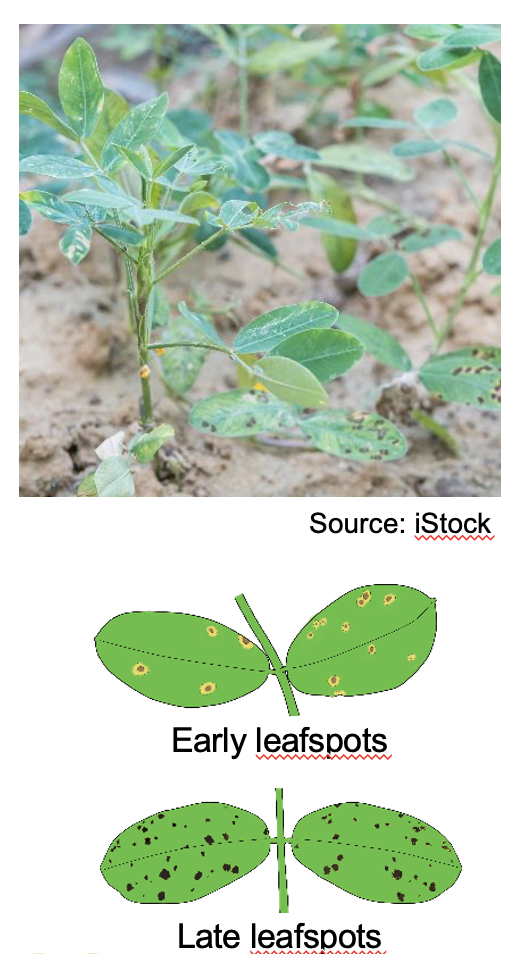
Important to know
Groundnut late and early leaf spots are considered to be the most widespread diseases of groundnut globally leading to pod yield losses of as high as 50 %.
Early leaf spot manifests early at about one month after planting in form of small spots with yellow halos on the upper side of older leaves. The spots are brown on the lower leaf surface. Between 6 to 8 weeks after sowing, larger, circular black spots appear, which are signs of late leaf spot. The spots also appear on the stems and petioles.
The disease infection and development is favoured when temperatures of 25 to 30 °C and 6 to 8 hours of high humidity prevail.
The diseases are due to largely soil-borne fungi that survive mainly on crop residues and on volunteer crops that grow from the previous season.
Leaf rust can easily be confused for leaf spot. The disease shows as orange-red spots on the leaves, which later turn dark brown, and causes curling of leaves and defoliation. The disease is of little consequence, if it occurs after the pegging and podding stages.
Both are fungal diseases and thus control measures of leaf rust are similar to early and late leaf spots.
Measures before planting
Rotation of groundnut with other crops is very important to create a distinct break in time between successive groundnut crops in a field. It reduces survival of the spores of the fungus in the soil.
Deeply burying, burning or feeding of the residues of groundnut crops to animals after harvest reduces inoculum that may infect the new crop.
Upwind planting of new groundnut crops as far away as possible from previous infected groundnut crops reduces infection of the new crop.
Resistant or tolerant, early yielding varieties limit the negative impact of early leaf spot. In Malawi, the Chalimbana 2005 variety has moderate resistance to the disease.
Measures after planting
Removing volunteer plants and weeds reduces humidity in the crop stand and thus limits risks of infection. Volunteer groundnut plants and other host plants of the fungus should be eradicated between groundnut crops through rotations.
Measures in case of infestation
Infected plants must be removed and buried deep in the soil or burned. They must not be composted, as the spores may survive in the compost and infect new crops.
Groundnut aphid (Aphis craccivora)
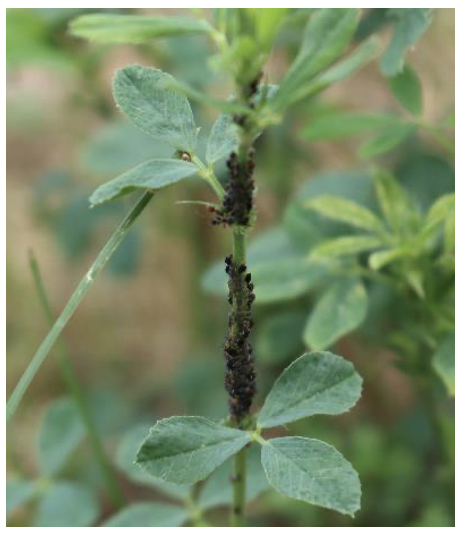
Important to know
Aphids attack and suck sap from the tender parts of the growing groundnut plant, like leaf and flower shoots. The removal of sap by the aphids weakens the plants. This causes poor and stunted growth, leaf curling and distorted leaf growth, wilting and reduces resistance to drought conditions, all resulting in yield losses.
The aphids are important vectors in the transmission of the Rosette disease virus.
Measures before planting
A proper crop rotation, removal of volunteer plants and weeds, intercropping, and burying crop residues during early land preparation can significantly reduce aphid infestations.
Tolerant or resistant varieties can be used, if available.
Measures after planting
The promotion of natural enemies such as Ladybird beetles (Coccinellidae species) and hoverflies (Syrphidae species), and parasitic wasps and flies can (among others) contribute significantly to the control of aphids in groundnuts. These natural enemies can be promoted with selected flowering plants that provide pollen and nectar for the development of large populations.
Measures in case of infestation
Spraying with potassium soap, quassia extract or neem seed or leaf extracts. These natural pesticides have a limited negative impact on beneficial insects.
Termites
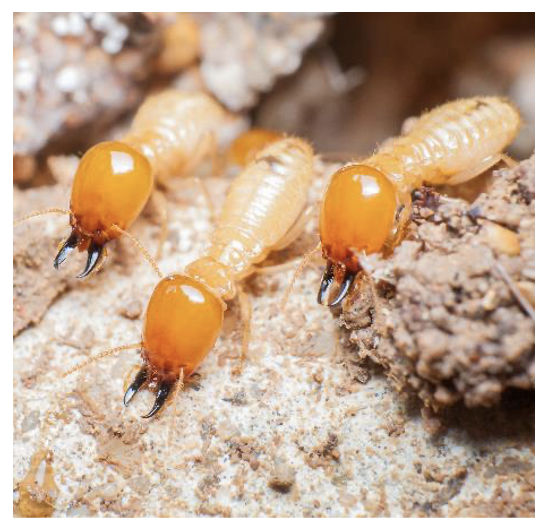
Important to know
Termites can damage groundnut roots and stems, and bore holes in the pods, thereby damaging nuts. When termites damage pods, they also provide an entry point for the Aspergillus fungi that produce aflatoxin.
Measures before planting
Incorporating crop residues into the soil early enough repels termites, as the residues produce a heat when they decompose.
Planting early can result in healthier and more vigorous plants, which can better tolerate termite attack.
Measures after planting
Timely harvesting to ‘escape’ termite damage is another useful measure.
Measures in case of infestation
The use of synthetic termiticides is not allowed in organic production.
In severe cases, destroying the termite mounds and removing the queen termites may be necessary.
Leafminer moth (Aproaerema modicella)
Important to know
The leafminers can reach epidemic levels and create severe yield losses.
The mottled adult moth lays eggs on the underside of the groundnut leaf and petioles. Yellowish green caterpillars hatch, tunnel into the leaves and feed between the upper and lower surface of the leaf. Mined leaves become distorted within a few days. When the grey-green caterpillars with a shiny black head emerge from their mines, they make a web around the leaves. Pupation takes place inside the webbed leaflets. Damaged leaves become brownish, rolled, and dry.
Severe cases of leaf miner damage look like the crop has been burnt.
Measures before planting
Using resistant varieties.
Practicing crop rotation with non-leguminous crops such as maize and sorghum reduces the leaf miner population.
Planting early at the start of the rains to avoid the pest build-up.
Intercropping groundnut with trap crops such as pearl millet and cowpea, and practicing a proper crop rotation.
Removal of the alternative hosts and weeds (i. e. amaranthus, hyacinth bean (lablab), mung beans, and Indigofera hirsuta) four weeks after planting and at least two times later when weeds are seen, reduces the leafminer population.
Measures after planting
Drought stressed plants are much more susceptible to leafminer attack than plants that have adequate moisture. Therefore, avoiding drought stress by irrigating, where possible, or early sowing the crop to take advantage of the full season rains reduces damages by the groundnut leafminer.
Measures in case of infestation
Removing and crushing webbed leaves, in which the green larvae hide, reduces damages on the crop and limits further multiplication of the pest.
Light, sticky or pheromone traps can be used to attract and catch the adult moths and to monitor the pest populations.