Pest and diseases management in organic soybeans
Soybean is attacked by several pests and diseases. The major insect pests in order of importance are nematodes, bean flies, leaf-feeding caterpillars, and storage pests – moth larvae and bruchids. On the other hand, most diseases are transferred through the seed. It is therefore very important to use seed that is free of disease pathogens otherwise chemically treated seeds are highly restricted in organic farming. This way the farmer can prevent losses or reduce them to a minimum. Major diseases include leaf rust, bacterial blight, mosaic virus, and anthracnose.
Proper management of pests and diseases in soybean production is based on a range of practices applied simultaneously to prevent the introduction and spread of infections.
Root-knot nematodes (Meloidogyne spp.)
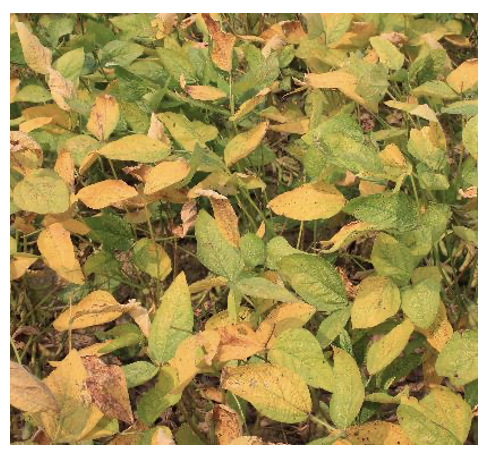
Important to know
Nematodes are small worms residing in the soil and damage the roots.
The effects of nematode damage are yellow leaves, stunted growth even if soil fertility is good, and wilting even when there is enough water in the soil. The roots of affected plants are distorted, swollen and show characteristic root galls (knots), which eventually rot.
Measures before planting
Planting resistant varieties, if available.
By practicing crop rotation with cereals for at least 3 to 4 years. The use of non-host grasses such as Katambora grass (or Katambora Rhodes grass Chloris gayana) during fallow periods or rotations can starve off the nematodes and suppress them while also improving soil structure through their deep dense roots.
Measures after planting
Timely weeding to reduce competition with the groundnut crop.
Soil fertility improvement to strengthen plants and make them less susceptible.
Measures in case of infestation
Infested plants and fields cannot be effectively treated – rather the land can be put under proper rotation to get rid of the nematodes.
Bean flies (Ophiomyia centrosematis and O. phaseoli)
Important to know
Bean fly maggots feed and destroy the tissue causing the stem to swell and split and reducing formation of lateral roots. Young seedlings and plants under stress wilt and die when attacked by bean flies. Older or vigorous plants may tolerate bean fly attack, but their leaves turn yellow, their growth is stunted and their yield reduced.
Measures before planting
Timely planting before the bean fly population increases.
Damage is more severe in plants growing under poor conditions such as infertile soils and drought. Under good conditions, soybean can compensate for minor stand reductions; thus, small gaps dispersed in a field normally are filled by adjacent plants and no yield reductions will be detected.
Vigorously growing plants are more resilient and can tolerate pests and disease infections.
Fresh manure should not be applied in the soybean field to avoid the bean-fly.
Early planting to avoid water-stress and proper weeding will also enhance quick growth of the bean plants.
Pests, like caterpillars, can be regulated by encouraging functional biodiversity. Caterpillars have a wide range of natural enemies (parasitic wasps and other predators). These natural enemies (beneficial insects) depend on nectar and pollen of host plants. Therefore, it is advisable to plant flowering plants along the boundaries or terraces within the field. Beneficial insects will build up their population and control the plant pest populations.
Measures after planting
Regular scouting for early detection of the infestation.
Fresh manure should not be applied in the soybean field to avoid the bean fly.
During weeding, slight ridging or earthing up of plants will help soybean plants to grow adventitious roots, if there is moisture, helping them to recover from bean fly damage.
Measures in case of infestation
Remove and destroy crop residues and all plant parts with symptoms of damage by bean flies.
Use of botanical plant extracts (such as Tephrosia, Tithonia, Marigold, Datura, and Neem leaves) can be used to eliminate any evading pests.
Soybean rust (Phakopsora pachyrhizi)
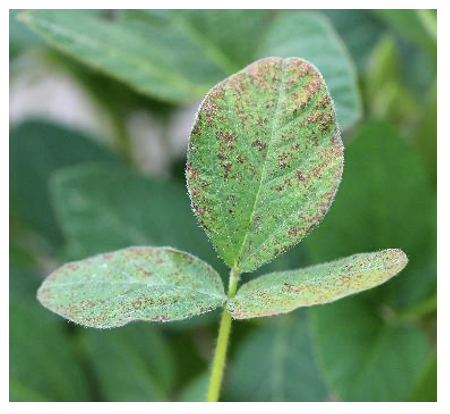
Important to know
The most common symptoms are grey green to dark brown or reddish-brown lesions particularly on the undersides of the plant leaves. These lesions cause leaf yellowing, and eventually result in premature loss of leaves and pod maturity.
Rust is most severe during long periods of leaf wetness (rainy seasons) and high humidity. Good ventilation through proper spacing is important to allow good air circulation in the soya bean fields.
Soybean is susceptible at any stage of development, and rust can reduce yield by as much as 90 %.
The pathogen is however not seed-borne in soybean.
Measures before planting
Avoid planting soybean near or in immediate rotation with cowpea, beans, or other leguminous crops, that may be a source of pest and disease infections.
Disease-infested plant material should not be left in the field, but made into compost. The plot should then be rotated with other crops. Beans or other legumes should not be grown on the same plots for any 2 consecutive seasons.
Choose improved varieties with good yield potential and, if possible, resistant to common diseases like soya bean rust or tolerant to major pests and adapted to local environmental conditions. Seeds should be obtained from approved seed suppliers or carefully selected by the farmer to avoid introduction of seed-borne disease like viruses.
Measures after planting
Ensure proper weed control to reduce on field competition and potential alternative hosts of the disease.
Measures in case of infestation
Remove and destroy infested and crop residues and bury or burn them.
Spray Sulphur compounds (0.2 % concentration) at the first signs of infection.
Soybean bacterial blight (Pseudomonas savastonoi)
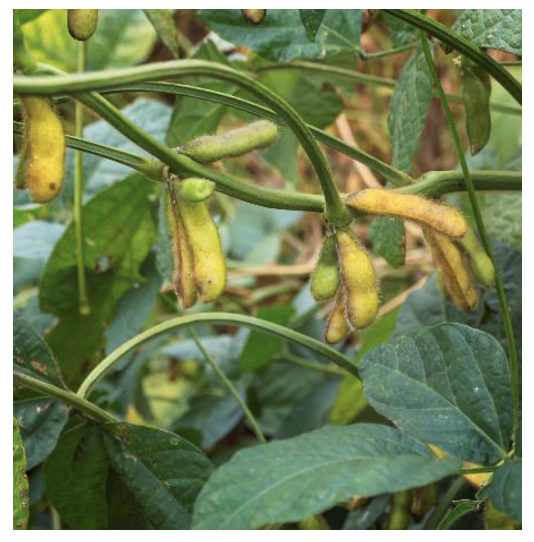
Important to know
Blight manifests as small yellow to light brown spots which appear on leaves, but also occur on stems, petioles, and pods. The spot centres soon dry out, turn reddish brown to black, bordered by yellowish-green circles. Young leaves are most susceptible. Infected young leaves are distorted, stunted, and turn yellow.
The bacterium is seed-borne. Seeds can be infected through the pods during the growing season, or they may be invaded during harvesting. Primary infections on cotyledons often result in secondary lesions on seedlings.
The bacterium is spread during windy rainstorms and during cultivation or weeding when the foliage is wet.
Measures before planting
Use certified clean seeds.
Plant resistant varieties, if available.
Practice good sanitation throughout.
Measures after planting
Ensure timely weeding to reduce on competition with the crop.
Measures in case of infestation
Remove and destroy infected plants.
Soybean mosaic viruses (soya bean mosaic virus or mosaic potyvirus)
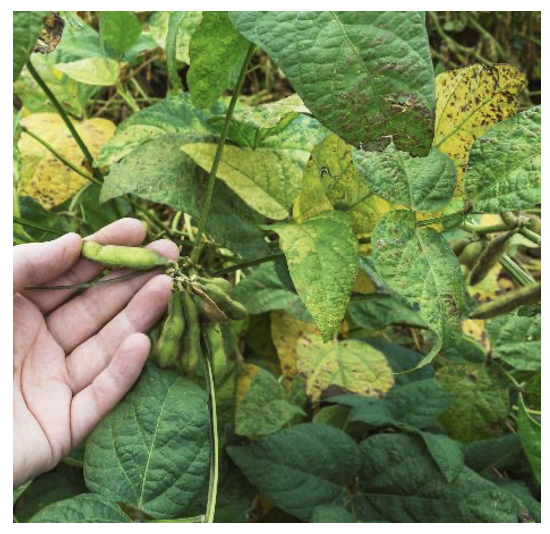
Important to know
Leaves of infected plants are distorted and die, and infected plants may become stunted.
The disease is transmitted by insects such as aphids, beetles, whiteflies, and infected seeds.
Measures before planting
The use of certified disease-free seeds and virus resistant varieties are primary control measures.
Measures after planting
Timely weeding to reduce on competition with the crop
Ensure that disease vectors such as aphids and whiteflies are under control
Measures in case of infestation
Remove and destroy infected plants.
Soybean is rich in protein which makes it very attractive to insects. It also decays quickly, especially under humid conditions. Soybean therefore has to be stored properly, whether for food, sale or seed material. Dried soybean for seed material should be kept in a cool, dry, dark place in airtight containers. There are other techniques locally used by farmers in Africa to preserve and store soybean for seed material. For example, storing seeds in ash of the neem tree or treating seeds with a neem tree solution.