Harvesting
HARVESTING
Harvesting is the process of picking the ripened fruit (berries) from the coffee trees. Coffee berries ripen progressively and may be picked at intervals of 10-15 days over a period of several months. Harvesting normally begins as early as February and extends as late as September in Malawi; the bulk of the crop being reaped between May and August.
FACTORS AFFECTING YIELD
There are a number of factors to be considered during harvest that can have an impact on the yields gathered, such as:
Method of picking: Pickers need training in the best techniques so that they can be most efficient.
Rate of ripening: Highest output is obtained when the main ripening flush occurs.
Number of cherries per kilogram: The higher the number of cherries per kg, the greater the potential return per picker per day and the more pickers required per hectare.
Cherry to parchment/ green coffee ratio: Cherry: parchment ratio varies between 5.5: 1 and 6.0: 1. Cherry to green coffee is approximately 7:1.
As a general guide: 100 ha of bearing coffee yielding 3 tonnes per hectare will produce 18 tonnes cherry per ha at a ratio of 1:6.
16.2. TIMING OF HARVEST
To obtain good quality, coffee berries must be picked at the correct stage of ripeness which is approximately 40-45 weeks after flowering. When the cherry is very ripe it is easy to pick, thus increasing productivity and ensuring better quality coffee. Effective pulping is also largely dependent on lubrication from fully ripe cherries. Coffee at a uniform stage of ripeness will ferment uniformly and allow more precise control over fermentation times.
The cherries should be blood red (or pinky yellow for varieties such as yellow Catuai and yellow Caturra) and easy to squeeze between finger and thumb.
Geisha and Agaro have small and uneven sized fruit which ripen first. SL28 and K7 ripen next then, finally, Catimor and Caturra.
Cherry selection is the first and key determinant in the quality potential of coffee during the final processing stage. For the production of speciality quality coffee in Malawi the selection of perfectly ripe coffee cherries is central to this quality potential.
Segmenting a farm into uniform blocks helps control optimum cherry selection. This is most commonly done by variety, age of trees, or altitude since these are key factors in determining the timing of ripening. Giving these blocks numbers, names or codes within a farm helps manage labour organisation as well as lot separation of processed coffee. Blocks are monitored regularly for yield estimation, cherry development, and level of ripeness. This provides information on when to pick and how many people are needed to effectively carry out the harvesting.
For co-operatives, working with farmers to understand how their smallholding fits into the flow of ripening for the whole group helps to manage this. Requesting specific varieties for delivery to the washing station on certain days is also crucial in managing lot quality through to the end consumer.
In Malawi selective picking is the most common practice in place. The number of picking rounds carried out on farms varies. Commercial quality farms will carry out three rounds plus a ‘last pass’. Farms geared towards optimising potential quality and accessing speciality markets will usually carry out six or more picking rounds plus a ‘last pass’ selection. By carrying out a higher number of rounds the pickers can be very selective in picking only ripe coffee, leaving partially or almost ripe coffee ready for the next round of picking. The number of rounds necessary can be calculated by ensuring all coffee plants can be picked every 8 – 10 days during the season.
There is a cost implication of adding in extra picking rounds but when carried out correctly, the income benefits from the higher quality crop will outweigh this added cost.
Uniform picking is extremely important for uniform processing because density, water content and sugar content will vary by ripeness. This will affect the later processing and potential quality of the coffee.
The exception to this is the end of the season when the ‘last pass’ will strip all remaining coffee off the trees. This is a crucial stage for plant maintenance and disease prevention. This final picking involves clearing the coffee plants of all remaining crop at the very end of the season.
Employee or family training at the beginning of the picking season is important in setting quality standards. Ripe and unripe cherries look and behave differently in a number of ways so areas to cover in this field based training include:
The colour of ripe coffee is fully homogenous across the whole cherry
Ripe coffee is easier to pick
Ripe cherry is harvested as an individual fruit between finger and thumb and removed by a twisting motion
Unripe coffee often brings the stalk with it
Ripe coffee will pulp between a finger and thumb easily
Ripe coffee is sweeter than unripe coffee when tasted
Different varieties have slightly different appearance when ripe
Yellow fruiting varieties appear orange to pinkish orange when fully ripe depending on cultivar
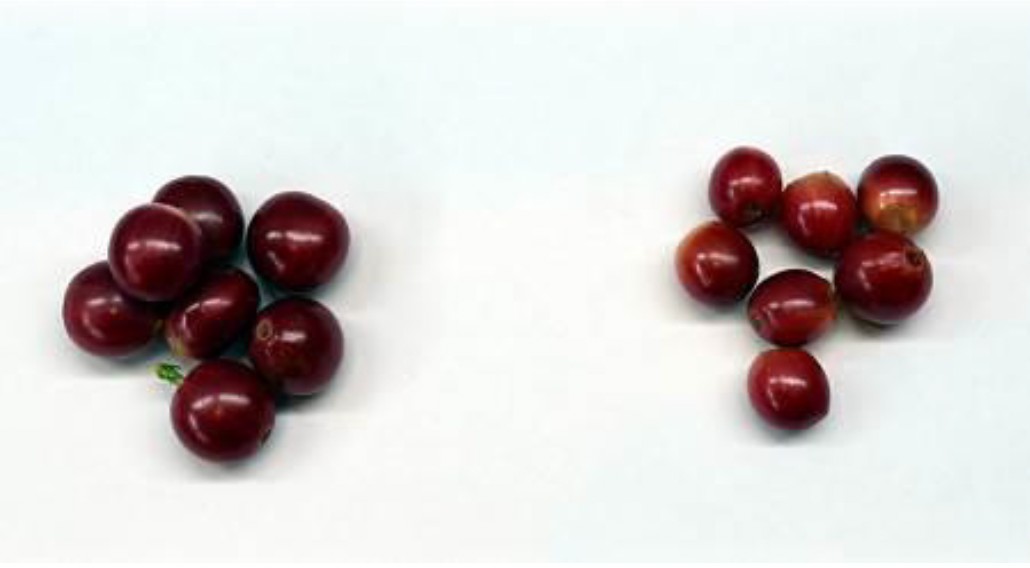
FIGURE 18: RIPE CHERRIES (LEFT) AND APPROXIMATELY 10 DAYS OFF RIPE CHERRIES (RIGHT)
Checking the quality of pickers early in the season using the classification method outlined in ‘Cherry Sorting’ below helps determine if further training is required and identifies areas for improvement.
At a more complex level some tools can be used to understand the exact level of ripeness of coffee.
The sugar content of handpicked coffee can typically vary from 17 – 25%. This can give a wide variation in potential quality. To have more control over quality one method is to measure the sugar content of coffee cherries using a Brix meter. They are particularly useful for:
Consistently maintaining quality standards through the picking season
Training picking teams on the range of acceptable quality standards of cherry ripeness
Optimising the ripeness of yellow fruiting varieties
Separating levels of ripeness for
selection in preparation for
alternative processing methods.
Brix meters can misread if there has been rain or mist in the previous twenty four hours because coffee will absorb moisture and reduce the actual sugar level. Because of this only use them to measure coffee sugar levels during periods of sustained dry conditions.
Good practice with Brix meters is to measure the fruit juices of 10 similar cherries and making a decision based on the average sugar level.
FIGURE 19: USING A BRIX METER

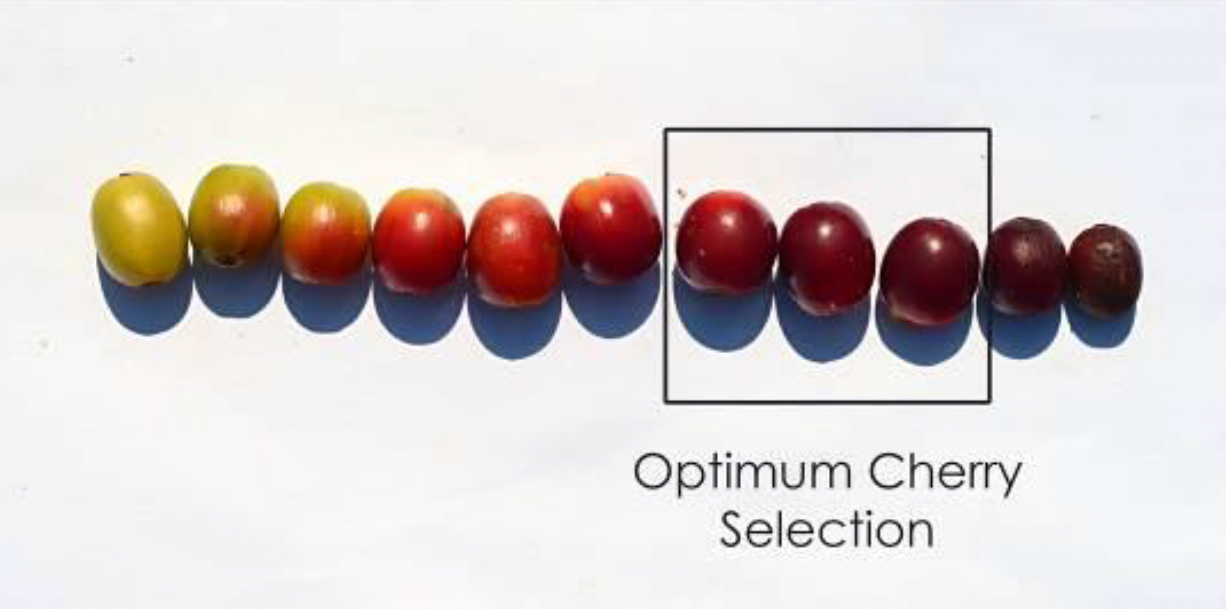
FIGURE 20: CHERRY RIPENESS SELECTION
PICKING METHOD
Pickers must be taught to pick with both hands simultaneously, each hand picking from either side of one branch. They should start from the top of the tree, close to the mainstem, and work outwards until they reach the end of the branch before moving down to the next. All branches must be checked for ripe fruit.
Each cherry should be picked individually, held between finger and thumb, and picked with a twisting action to ensure it is separated from the stalk (this means stalks are likely to flower and produce again, and that pulping can happen without irritation from stalks). Some coffee farmers also harvest two to three cherries at a time by using the finger as a wedge and rolling the thumb over the cherries and twisting the bean slightly with the finger. If harvesting with a lot of stalks this indicates the picker is pulling the cherries off as opposed to rolling his thumb.
The picker should only transfer fruit to the bag once hand is full and the base of each tree should be checked for fallen fruit before the picker moves on to the next tree. Fallen fruit which are not properly ripe (i.e. are still green, brown or black) should be kept separate for sun drying. Therefore pickers need another small bag on them for this fruit.
Preferably each picker should have their own line or lines of trees. If the trees are very tall (such as the SL 28 variety) ladders are probably required.
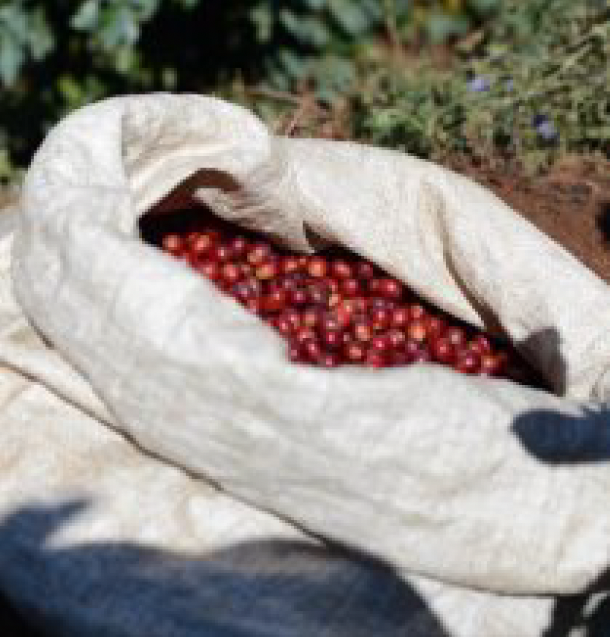
FIGURE 21: COLLECTING PICKED CHERRY IN A BAG PRE-SORTING
PICKING POCKET
Each picker should have a pocket, made from polythene or hessian, which they tie around their waste using an attached cord. The picking pocket method means that fewer labourers are required per day to collect the same quantity of fruit.
A wire in the top if the pocket and two stones in the sides of the top seam (with top seam rolled down on top) should keep it slightly open. It should hold seven or eight kilograms of cherry when it is full.
To prevent the reaping pocket from being over-filled, a larger bag could be moved from tree to tree as well which is used to hold the fruit emptied from the picking pocket.
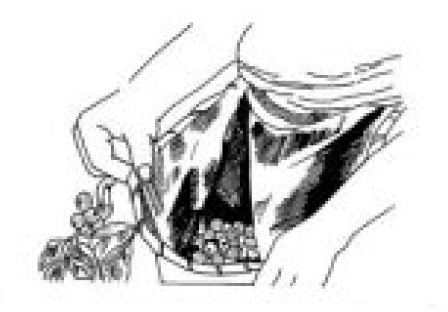
ıFIGURE 22 – COFFEE PICKING POCKETS
LABOUR REQUIREMENTS
Labour requirements will vary from place to place, depending on the altitude and the general age of the plantation (ie. the older the coffee the later the harvest). Average daily pick will range between 30-50kg cherry per day with 3- 5 labourers required per day per hectare over the main harvest period. The first harvest in February/March is always of poor quality and harvesting should be treated as a cleanup i.e. ripe, over ripe and if the few under ripe cherries should be harvested (this ensures that the second harvest is of a good standard).
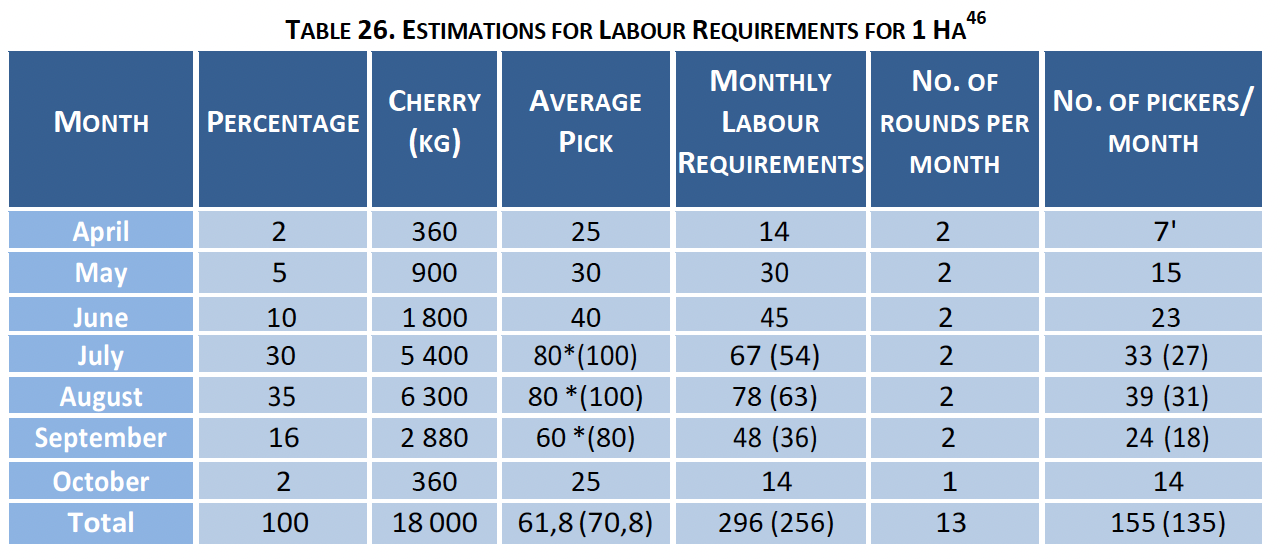
One junior supervisor should be responsible for 30-50 pickers who are part of one or a number of picking teams. Output quantity and quality should be analysed for each specific team and also the individual lines of trees so that the source of any problems can be easily identified.
Before weighing, the quality of each picker's coffee must be checked (e.g. for too much unripe fruit and whether stalks have all been removed). The workers should pick over any coffee that is not properly picked (i.e. remove green fruit, stalks and extraneous matter). This will deter bad picking as well as ensuring the quality of cherries to be pulped.
Payment is based on the labour wage regulations (information on this is available through CAMAL) but remuneration and bonuses can be used to give incentives to workers to increase productivity. In the mid-season when the majority of fruit is perfectly ripe, the employees are paid according to the amount of fruit that they harvest. At an early or late stage of ripening, pickers are usually paid a specific sum because there is not sufficient coffee to warrant payment per quantity picked, however the payment is usually given based on a threshold level of fruit being gathered.
WEIGHING
Weighing points should be positioned so that pickers do not have to carry picked coffee long distances. Weighing should commence early enough to ensure that pickers do not have to wait around with full bags of coffee, and so that pulping can also get underway. It should be a continuous process throughout the day.
CHERRY SORTING
Immediately after picking coffee should be kept in the following conditions to prevent fermentation or spoiling:
Bags or silos for a maximum of 8 hours before processing
At temperatures of no more than 40°C and in the shade
Once picked, cherry sorting is a method commonly used to refine the quality of picked cherry when it is received from the fields. This sorting of the day’s crop further refines the quality management process in preparation for secondary sorting. A range of strategies are employed by farms and co-operatives to sort cherry delivered to the washing station
An effective way of organising qualities of coffee is to:
1. Draw 100g or 1kg incoming cherry
2. Classify as:
Green
Unripe
Immature
Ripe
Overripe
Raisin
3. Group this classification into quality sections of A, B and C grade e.g. An example ‘A Grade’ could be “Contains at least 90% fully ripe, and has 0% green cherries and 0% raisins”
This is a very effective method of maintaining picking quality in the field when used with portable hand scales. Individual organisations can set their own quality standards within these categories. An example form with two completed examples can be seen below
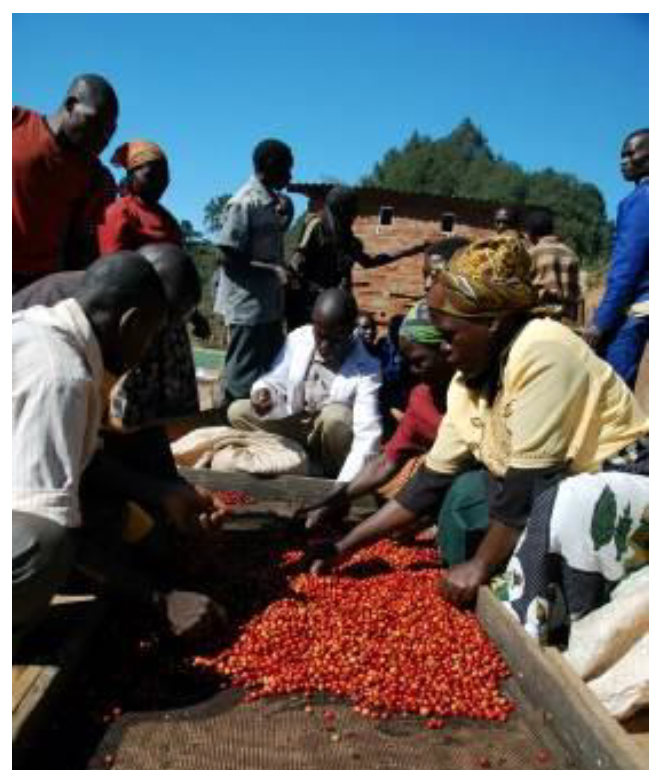
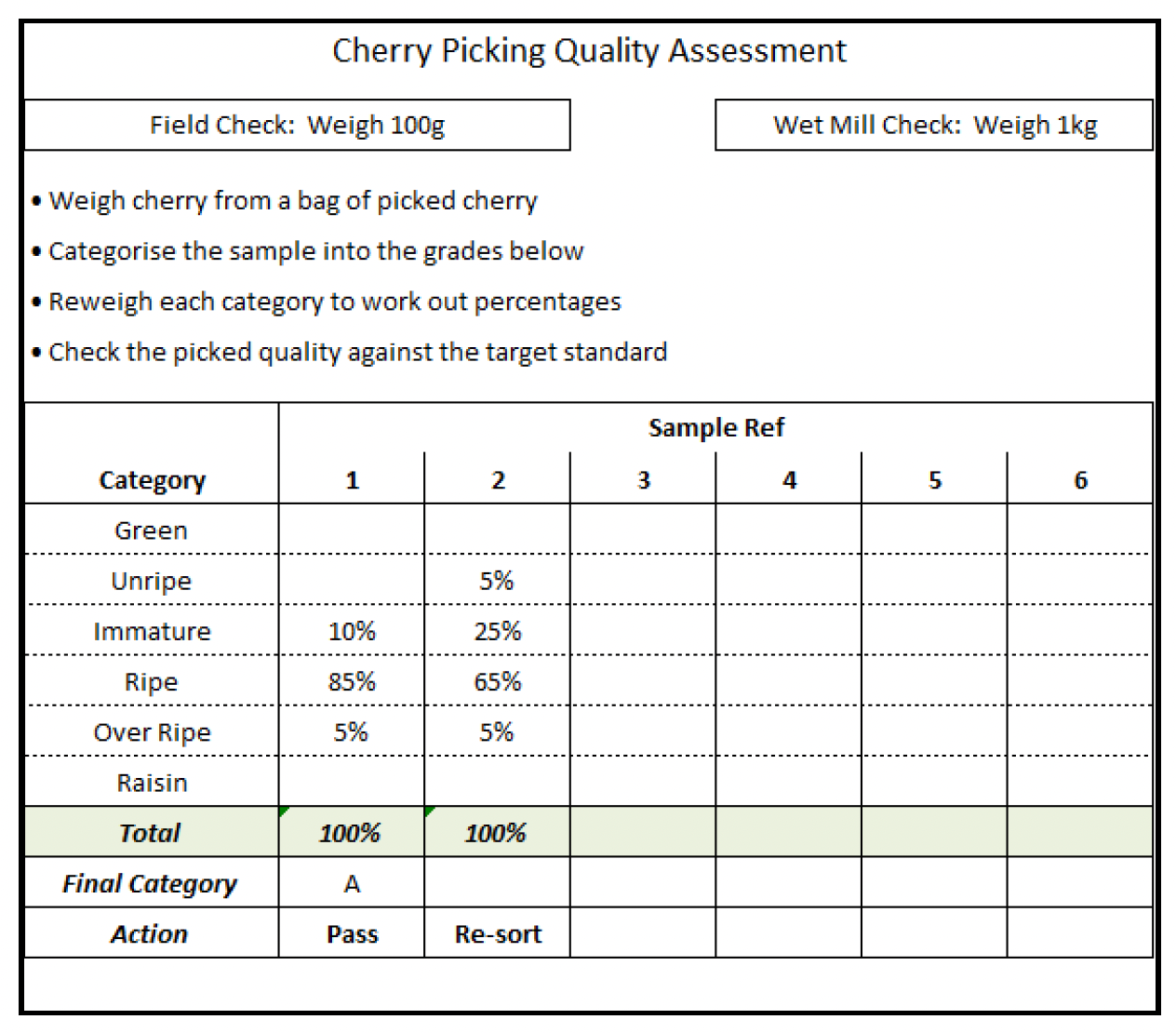
FIGURE 24: CHERRY PICKING ASSESSMENT EXAMPLE
Once classified, further re-sorting of cherry either by hand or by machine before processing is also commonplace. By hand, this re-sorting requires labour, time and space to ensure that all product is prepared for secondary processing. Improved picking quality in the field will result in less time re-sorting. The method is to empty a delivered sack of cherry onto the sorting medium of either spare mobile wire beds or clean, dry tarpaulins. Workers then identify cherries that fall outside of the agreed quality standard for separate processing. Prior to processing, the different grades of cherry are weighed and recorded.
In order to make the above process less time consuming, a picking supervisor should be checking throughout the day for quality control wherever possible.
For larger commercial farms machinery for resorting is available. Mechanical sifters/hydraulic separators will remove foreign bodies, over-ripe coffee and floaters, while washer separators will sort small unripe fruit from fully ripe coffee.
Specifically potential qualities from this separation could be defined into A, B and C grades where:
A grade – speciality quality potential
B grade – commercial quality potential
C Grade – commercial to low commercial quality potential
Marking blocks for sorted, A, B and C qualities helps manage process flow at the wet mill. From this stage these lots will be separated all the way through the supply chain to end consumer. High quality ripe coffee cherry will yield more weight than partially ripe coffee after processing and produce less milling defects if managed correctly.
WASTE REDUCTION
Cold winds or frost can stop coffee berries from ripening and may even cause physical damage. For example temperatures below 5 degrees centigrade will cause ripening of the fruit to be bright yellow. These may be pulped but they should be kept separate. Similarly, frosted, ripe coffee may be pulped if it is picked before it dries out.
If semi-ripe damaged fruit dry out to some extent they may be soaked in water for 12 hours and then pulped. Again, they should be kept separate. Severely damaged, or dry, fruit should be sun dried and treated as ‘mbuni’. Over-ripes can be re-soaked overnight, pulped and then classed as double pass.
A process known as “stripping” is done at the end of the season when the picking efficiency becomes very poor. At this point all the ripe and unripe fruits from the tree are picked to be sun dried and sold as unwashed coffee or hulled on the farm and sold as green coffee.