6. Health and Disease Control
6.1. Introduction
Diseases and parasites are a major cause of deaths and loss of condition in pig production. An outbreak can have disastrous consequences. A farmer should thus regard disease as a potential economic threat. To minimize this threat, the farmer should keenly monitor the pigs for any signs of disease, maintain close contact with veterinary personnel for advice and emergency cases, and report suspected disease conditions early for quick diagnosis and treatment.
A healthy pig and diseased pig will always show signs of good or ill health (Table 14). A pig can be sick from a bacterial, viral diseases and parasites. To know whether a pig is sick or healthy a farmer should always look for signs listed below.
A healthy pig will:
1. Move about steadily
2. Breath steadily and easily
3. Eat well
4. Have a loose shiny skin
5. Have bright eyes and moist nose
A sick pig will show:
1. Loss of appetite
2. Difficult and abnormal breathing
3. Dull animal
4. Defecation of excessively hard or watery feces
6. Feces are blood-stained or contaminated with worms
7. High temperature (fever) and abnormal heartbeat
8. Rough hair coat and loss of condition
9. Coughing, lameness, diarrhea, nasal discharge, abortion and skin discoloration
10. Rubbing against hard objects (signs of irritation or itching)
6.2. Types and main diseases of pigs in Uganda
A basic knowledge of the main diseases which may affect a pig herd is necessary so that the farmer can diagnose the condition and implement control measures as quickly as possible. Some of the common pig parasites and diseases in Uganda are summarized in Table 15. Some highlights on the most important ones are given below:
Major Parasites:
1. Mange mite (common local name)
2. Lice (common local name)
3. Jiggers (common local name)
4. Fleas (common local name)
Major viral diseases:
1. African Swine Fever
2. Gastroenteritis
3. Foot and Mouth disease
6.3.Controlling diseases in pigs
6.3.1 Prevention is better than cure.
The saying “prevention is better than cure” is very relevant in the pig industry. A farmer should strive to prevent disease outbreak rather than struggle to cure it. A clean, sanitary environment provides the best prevention for internal and external parasite which can be serious problems. Confinement prevents pigs from contaminated fields and dirty lots.
Some drugs, e.g. wormicides, when properly used, aid in elimination of parasites. Antibiotics also protect pigs against disease proliferations and reduce disease outbreaks. They can also promote growth in pigs when given at recommended levels. For diseases that can be prevented through vaccination, a Veterinarian should be contacted to provide such services routinely.
Types and diseases of pigs in Uganda
1. Parasites and worms: These are organisms which live on and obtain food from the body of another, known as the host. They can live on the body (external parasites) or within the internal tissues and organs (internal parasites) of the animals.
• External parasites: mainly cause irritation to the skin surface, often leading to wounds and increased susceptibility to other infections. Some of the common external parasites are flies, ticks, lice, mangemites, etc.
• Internal parasites: are more common to pigs on free-range.. An example is the round worm (Ascaris Lumbricoides) which causes lots of damage to pig herds. The roundworm can grow up to 300mm long and 6mm thick in the small intestine. Heavy infestation leads to inherit in piglets, weakness and loss of weight. The other harmful worms include tapeworms, e.g. Taenia Solium, which has the pig as its intermediate host, while the adult worm lives in man. Pigs become infected by picking up eggs from human faeces and the larvae then encyst in the pig’s muscle.
To prevent worm infestation in pig herds, avoid contaminated water and feeds. Deworm with broad-spectrum antihelminthics as recommended by your Veterinarian.
2. Viral diseases.
• African swine fever: This is also the most contagious and deadly in Uganda. It can cause up to 100% mortality within a very short time. The disease is spread by bush pigs and warthog which are carriers of the virus though are themselves immune to the disease. Infection occurs by contact with other sick pigs or through contaminated food or water. There is no effective vaccine as at now. Infected pigs should be killed and properly disposed of.
• Swine Dysentery: This is a highly contagious and acute viral disease of pigs and is frequently fatal. The spread is by animal contact, contaminated urine and faeces or other body secretions. There is no effective treatment except vaccination programs to be instituted if there is danger of pig cholera infection. Avoid contact with infected animals.
• Swine Influenza: This is a respiratory disease that is highly contagious, caused by the influenza virus. Stress due to rapid changes in temperature triggers off the disease. Mortality is normally low but it is of great economic importance due to stunting and reduced live weight gains. There is no treatment or preventive vaccine available, but good farm management and avoidance of stress can limit outbreak.
• Transmissible Gastroenteritis (TGE): This viral disease is characterized by acute diarrhea, vomiting and early death in young piglets. The disease can also affect older pigs but rarely results in death. There is no known effective treatment, but infected pigs can be isolated or killed and buried. The herd is normally immune after infection.
3. Bacterial diseases.
• Swine dysentery: This is the most common cause of death in baby pigs, especially within the first ten days. The bacterium, commonly found in the intestinal tract, causes the disease. It produces toxins which stimulates a massive fluid loss into the small intestine leading to scours, dehydration and death.
To control it a farmer should avoid stressful condition for pigs; immediately give oral administration of antibiotic to sick pigs; and ensure good farm management and proper feeding of balanced ration. Piglets must be given colostrum.
• Salmonellosis: It is a disease of the intestinal tract caused by Salmonella bacteria. Pigs of about two months are most affected. Heavy worm infection triggers it off. To control it a farmer should ensure good management, practice high level of hygiene and sanitation and provide antibiotics and sulphur drugs in feed.
• Erysipelas: This is caused by a bacterium agent which lives in the soil. Pigs can pick up the agent from soil or by animal contact and even humans. In the acute form, sudden death is common. Routine vaccination programme is recommended and once the disease is diagnosed treat immediately with antibiotics.
6.3.2. Treatments of diseased pigs.
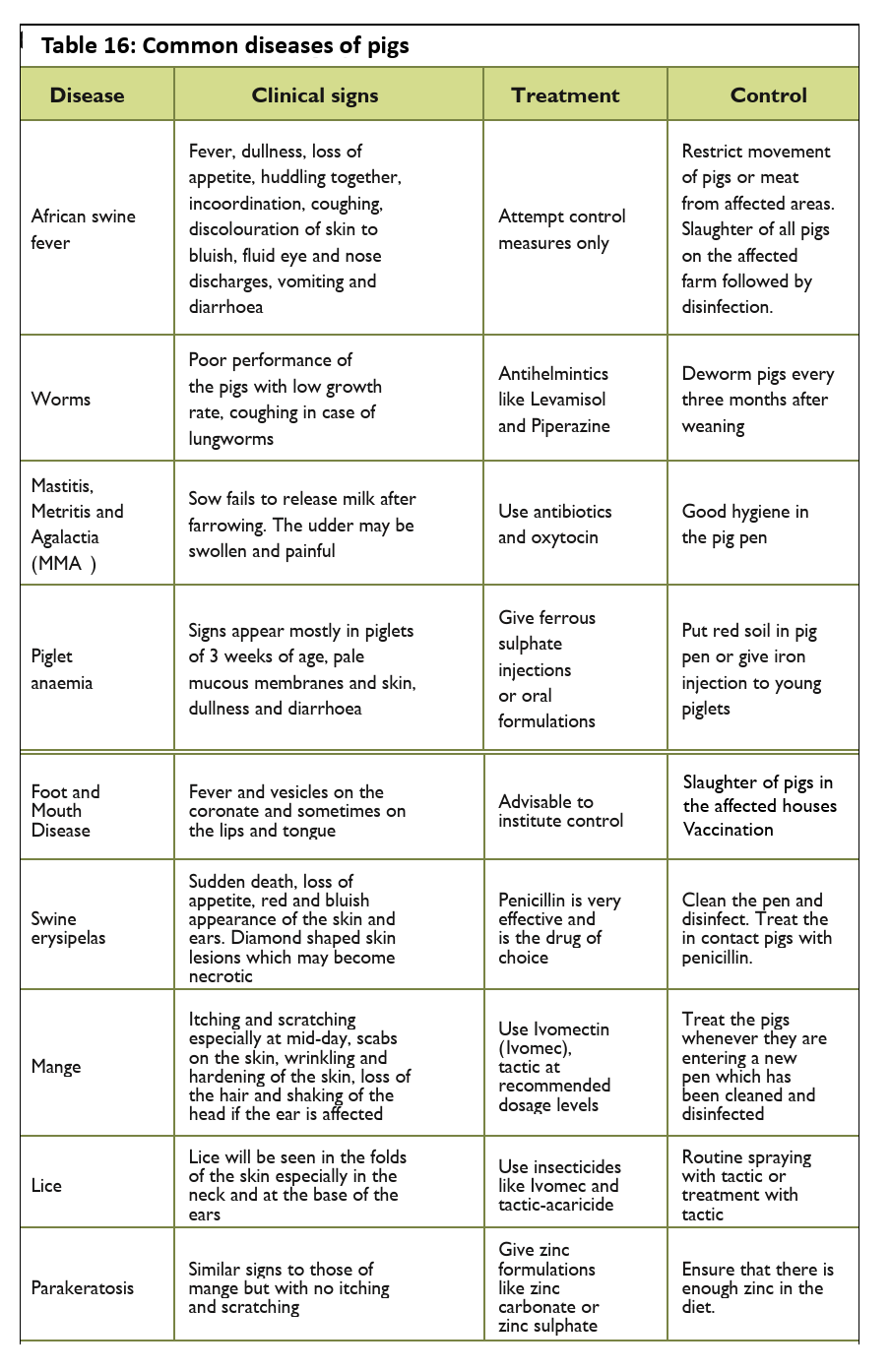
Sick pigs suffering from any of the diseases mentioned above can be treated and cured through use of veterinary drugs and other measures. The main diseases, their symptoms, treatment and control measures are summarized in Table 16. A farmer should always consult beforehand, his or her nearest veterinary personnel for better diagnosis and recommended treatment.