3. Fermented Bed Technology (FBT)
3.7. Introducing the piglets to the bed.
The bed should be turned daily and allowed to ferment for eight days before the pigs are introduced into it. The pigs should be transported either early in the morning or at night to minimize exhaustion and possible death. A 16m2 floor structure can hold between 10-15 three to six months old pigs. Once in the housing structure, the pigs should be given multi-vitamins and dewormed one hour before feeding.
3.8. Management of the bed.
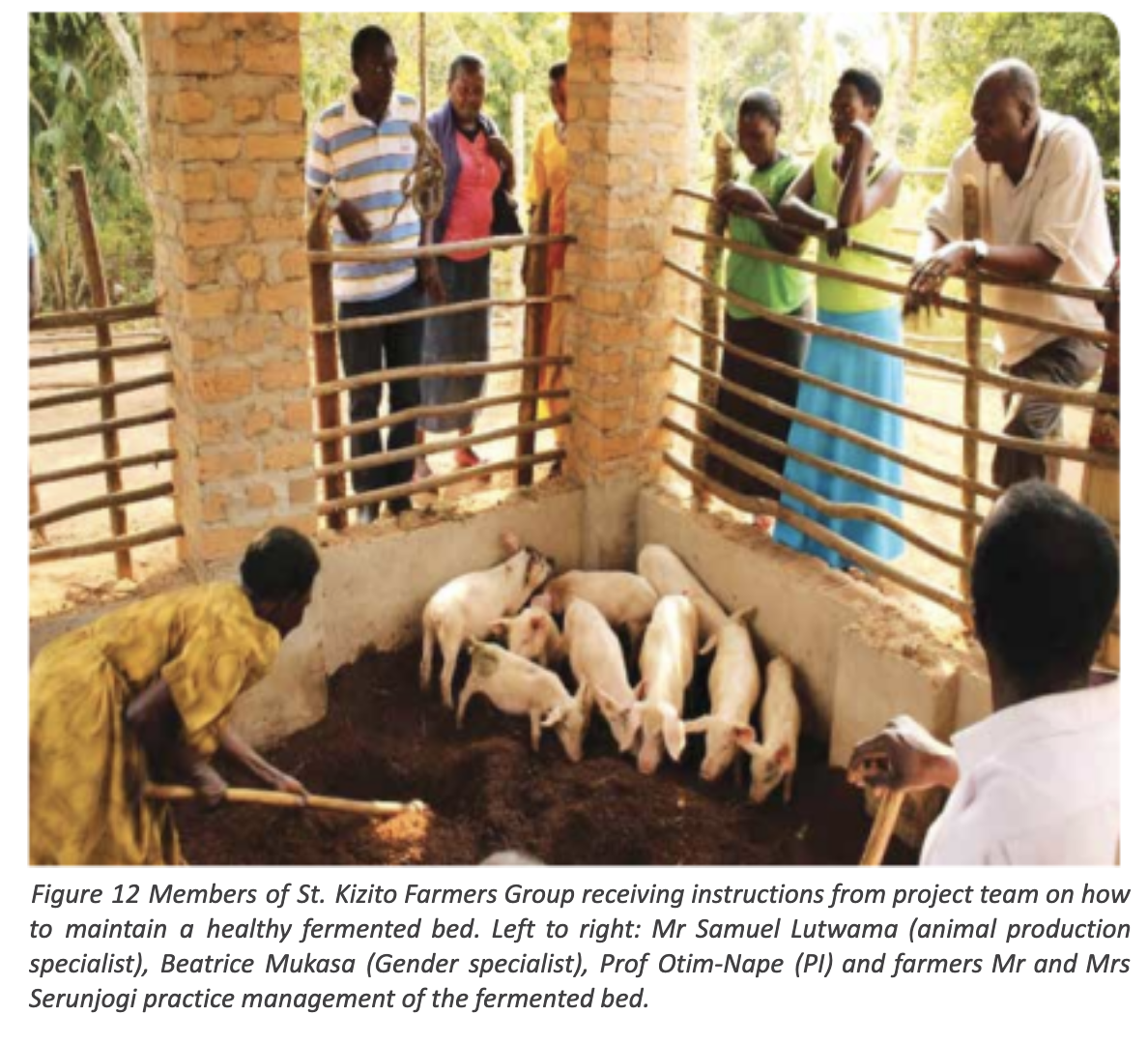
Use a garden fork to turn the bed for the entire period the pigs are in the structures. Turning the bed using a garden fork helped in burying waste and loosening the bed to encourage the pigs to root. This practice reduces fly populations and odor in the structure which is one of the benefits of the technology.
You should turn the litter at least twice a week. The liquid IMO should be sprinkled each time the bed is turned (Fig 12). Adding the solution to the bedding once a week ensures a high level of micro-organism activity which will keep the bedding healthy and free from smell.
3.9. Maintenance of the pig house.
The following maintenance activities should be carried out when using fermented bed technology for pig production.
3.9.1. Maintaining a healthy fermenting bed
• The bed should be sprinkled with a solution containing Indigenous Micro Organisms at least twice a week.
• Concentrate the IMO in the corner where the pigs excrete their waste
• Turn the litter using a garden fork each time IMO is sprinkled.
• The garden fork should reach where the maize stalk starts
• Care should be taken not to over wet the litter as this will drop the temperature in the litter to less than the desired 600C
3.9.2. Cleaning and disinfecting
• Wash plastic water and feed troughs daily using detergent
• The walls/ off-cuts should be inspected for any cracks as these may harbor mites and other parasites
• Remove any food remains such as banana peelings or potato vines. The bed should be only fine sawdust
• Whenever a pen is emptied, start the fermentation process afresh before introducing a new litter of pigs (see text box 2)
3.9.3. Repair works
• Paint all wood works once a year
• Pour termicide around the poles every year
• Inspect roof for any leakage
3.9.4. Water sources
• Pigs require water for drinking while some is used to maintain hygiene of the house. Water can be from natural springs, harvested rain water, boreholes or piped water.
• Among the above, harvested rain water is the most abundant. It can be stored in metallic or plastic tanks, or concrete underground tanks. Storing harvested water reduces costs and saves time and labor that women and children would have spent in collecting water